16 Budget Living Room Ideas That Look Designer

Most living rooms that look expensive are not expensive. They just have a few things done right, and those things are rarely the sofa. A sofa gets the credit, but the small stuff does the work.
I keep noticing the same pattern in the rooms people save the most. The curtains hang high. The lamps sit low and warm. The rug is big enough to matter. None of that needs a big spend, but it does need you to know where to put your money first.
That is what these budget living room ideas are about. Each one is a small move you can make in an evening or a weekend, using things you can find at a regular store, a thrift shop, or a hardware aisle.
You do not need to do all sixteen. Pick three that fit your room, start with the one that bothers you most, and see how much calmer the whole space feels. Renters, I kept you in mind the whole way through.
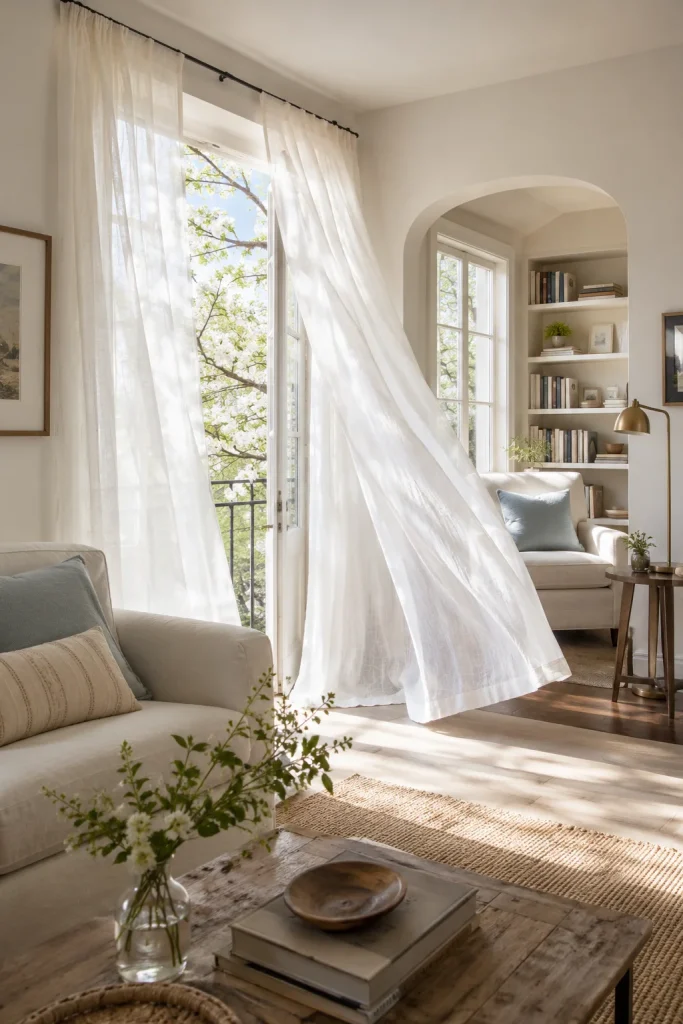
1. Hang Sheer Curtains Close to the Ceiling to Stretch a Short Window

Curtains hung right at the window frame chop the wall in half and make the ceiling feel lower than it is.
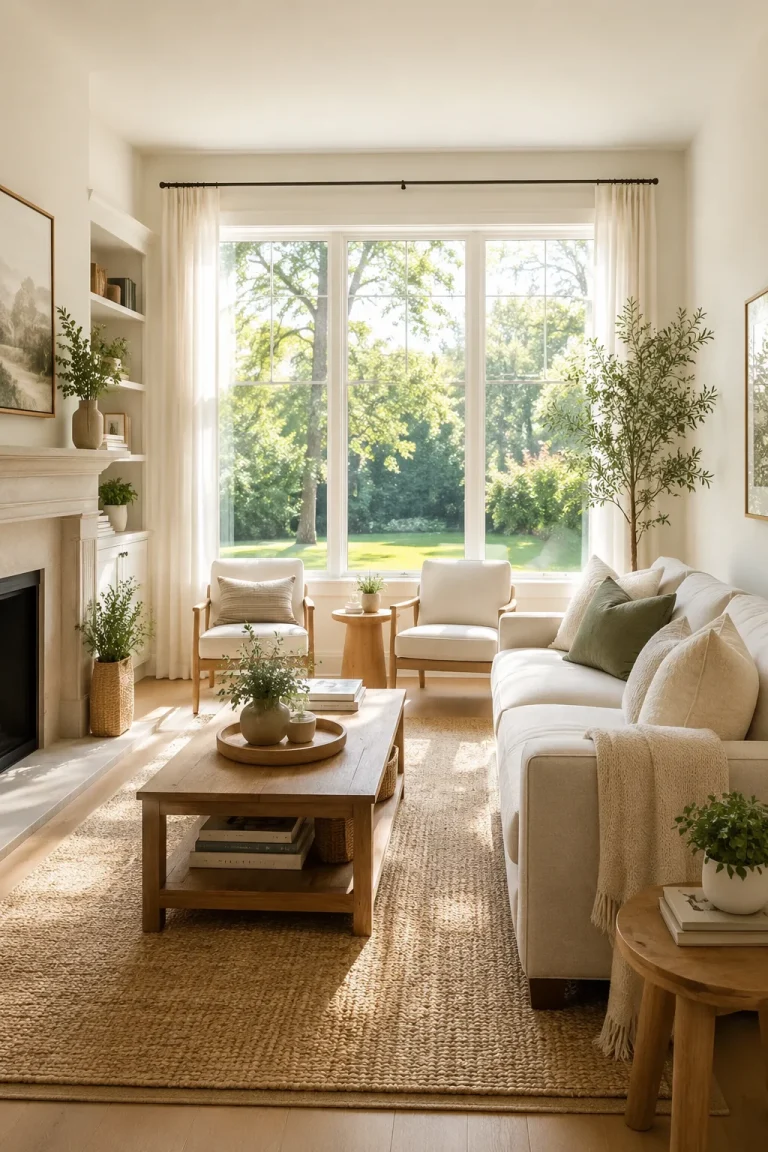
Move the rod up so it sits a few inches below the ceiling. Choose sheer white or cream panels so daylight still comes through, and let them fall all the way to the floor.
- Mount the rod high, not at the frame.
- Make it wider than the window so the glass stays uncovered.
- Buy panels a little longer than you think you need.
Steam out the fold lines before hanging. It makes cheap fabric look far more expensive.
Short panels stop at the sill and the rod hugs the frame. The window looks small and the wall feels split in two.
Floor length sheers on a high rod pull the eye upward. The window looks taller and the light feels softer.
2. Swap the Overhead Light for Three Small Lamps at Different Heights

Use the three height rule: one lamp low, one in the middle, one tall.
A single ceiling light flattens a room and makes everyone look tired. Switch it off in the evening and let lamps do the work. Warm bulbs matter more than the lamp itself, so check the box for a soft white glow.
- Low: a small table lamp on the TV console or a side table.
- Middle: a shaded lamp on a shelf or sideboard.
- Tall: a floor lamp tucked behind the sofa arm.
Thrift stores are full of solid lamp bases, and a new shade often costs less than a new lamp.
💡 Quick Tip
Tilt each shade so the light bounces off the wall instead of hitting the sofa. It hides glare on the TV screen and makes the corners feel deeper. Plug the lamps into one smart plug or a simple timer so the room is glowing before you walk in.
3. Hide String Lights Behind a Sheer Curtain for a Soft Wall of Glow

Warm white lights behind a sheer panel look like a soft wall of light, not a party.
Look for curtain style strings with drop strands. They hang straight and don’t knot up in a drawer. Clip the top strand to the rod with small hooks, then let the sheer fall in front so you see the glow and not the wires. Pick warm white. Cool white makes a living room feel like a waiting room.
Tuck the plug and battery box behind the sofa so nothing dangles.
4. Frame a Trio of Affordable Prints in Matching Wood Frames

Three frames in three different finishes look like leftovers.
The fix costs nothing extra. Pick one wood tone, one frame size, and prints that share two or three colors. Botanical sketches, soft florals, or simple line art all work because they repeat a shape without shouting. Hang them in a row at the same height with a small, even gap between each one.
Tape paper cutouts to the wall first, so you can shuffle the layout before you commit to any hooks.
What to grab first
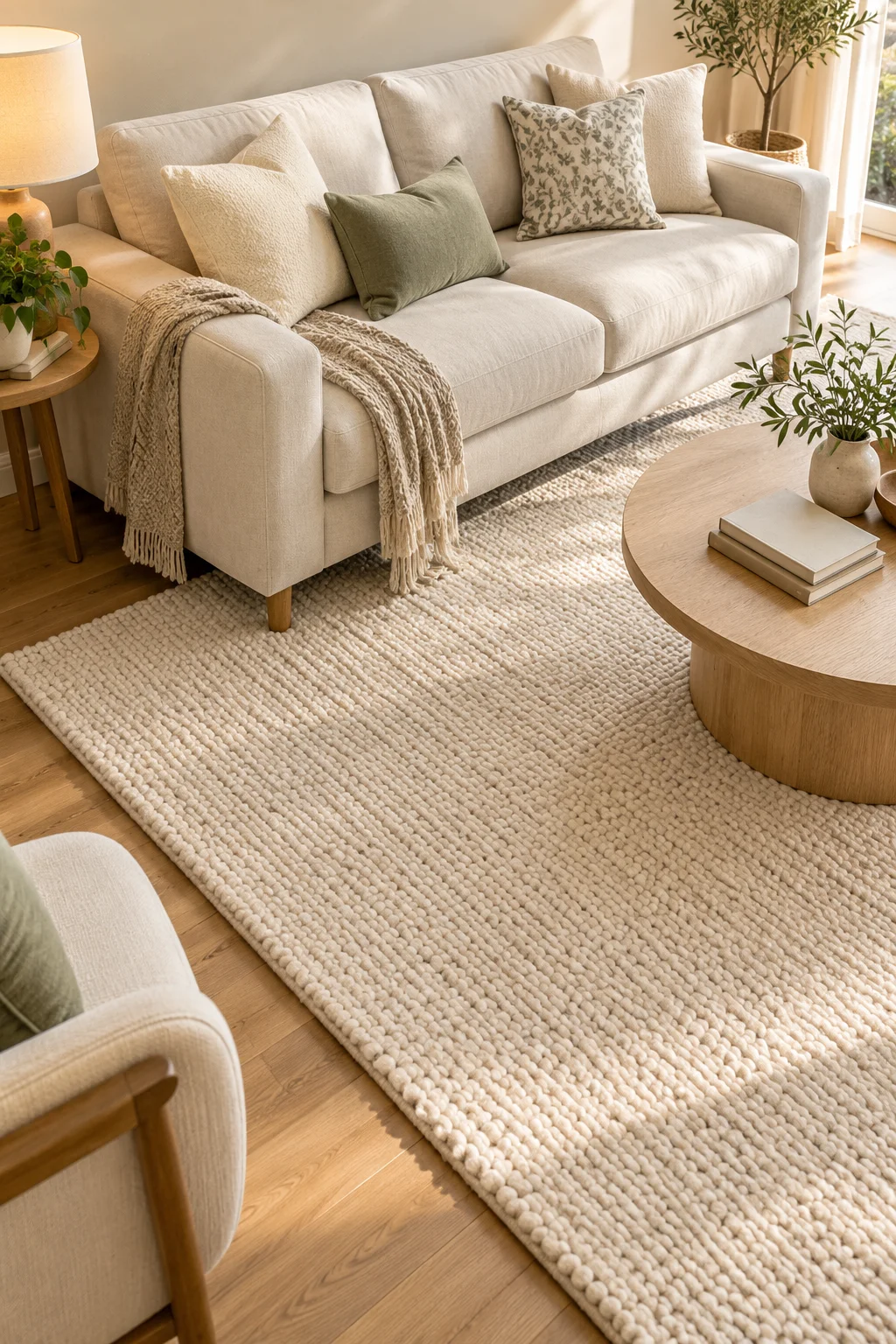
5. Lay a Large Neutral Rug So the Front Sofa Legs Sit On It
Start with a tape measure, not a rug.
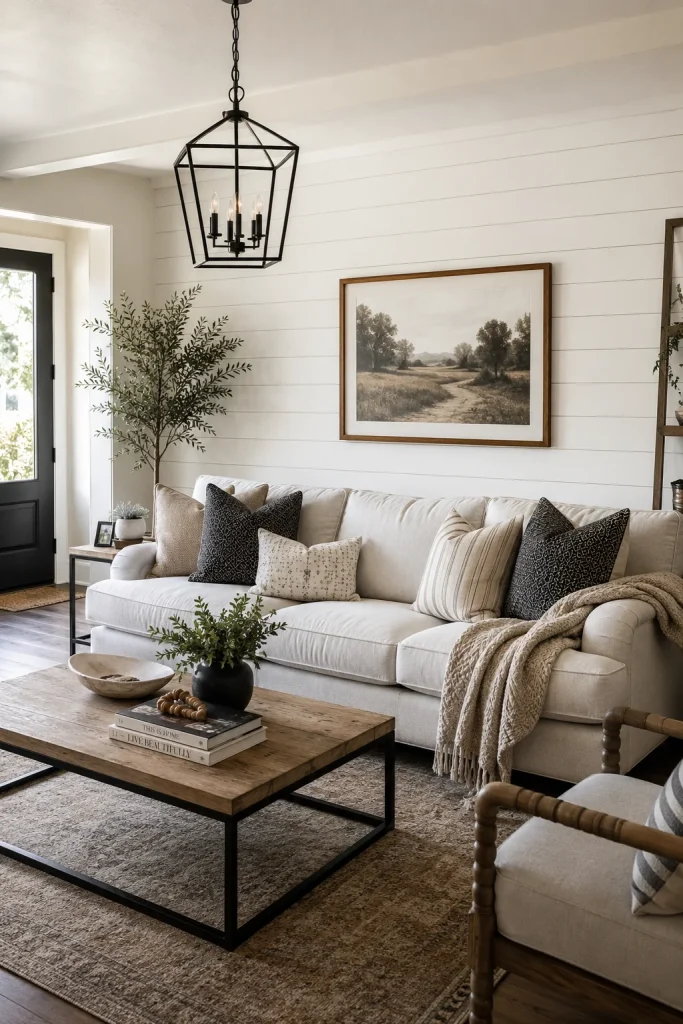
A small rug floating in the middle makes the whole room feel unfinished. Go bigger than feels reasonable, so at least the front legs of the sofa and chairs rest on it. A low pile in a neutral color with a chunky weave hides crumbs and keeps the room calm.
If the budget only stretches to one rug, buy the large one and skip the small accent pieces.
Put the front sofa legs on the rug.
Leave a border of bare floor around the edge.
Pick a neutral you can keep for years.
A rug that stops before the sofa starts.
A loud pattern that fights your pillows.
Thick pile under a light coffee table that wobbles.
6. Layer Three Textures on the Sofa Instead of Buying a New One

A tired sofa with good styling often beats a new sofa with none.
Stack three textures instead of shopping for furniture: a chunky knit throw, a smooth linen or cotton pillow, and a fuzzy or bouclé one. Keep them in one color family so the mix reads calm, not busy. Odd numbers look more relaxed, so go with three or five pillows on a corner.
Wash the covers first. Fold lines show up fast in lamp light.
| New sofa | Layered textures |
|---|---|
| Cost: high | Cost: low |
| Wait: delivery and assembly | Wait: one afternoon |
| Risk: the color may clash once it arrives | Risk: swap a cover if it does |
| Renter move: heavy to carry | Renter move: fits in one box |
7. Fill the Emptiest Corner With a Faux Olive Tree

Almost every living room has one corner nobody knows what to do with.
A faux olive tree solves it because the trunk is slim, the leaves are small, and it doesn’t fight the furniture around it. Drop the plastic nursery pot and set it in a woven basket or a plain white planter. Then bend a few branches upward and fluff the leaves until it stops looking like a store display.
Wipe the leaves with a damp cloth every few weeks and it keeps its shine.
8. Mount One Floating Shelf Beside or Above the TV and Style It in Threes

A single shelf gives you a spot for lamps, plants, and frames without using any floor space.
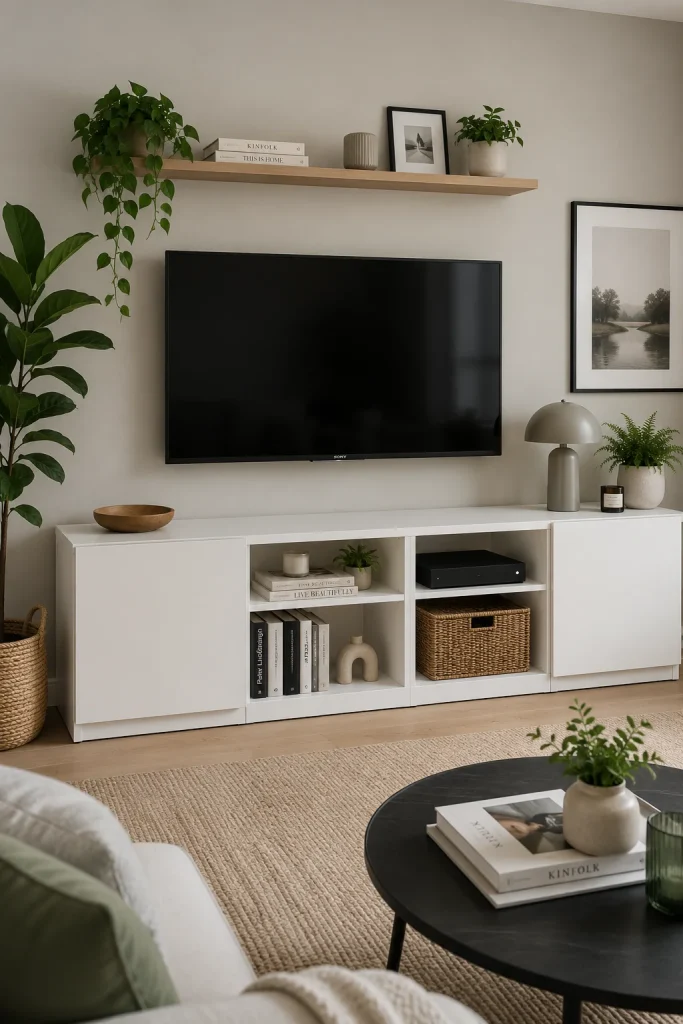
Style it in threes. One tall piece, one medium piece, and one small piece, in mixed materials like ceramic, glass, and greenery. Leave a little bare shelf so the display can breathe. A trailing vine over the edge softens all those straight lines.
Check the shelf’s weight limit before you load it up.
Mark the height with painter’s tape, then step back and check it from the sofa.
Anchor into a stud or use wall anchors rated for the load, and keep heavy items closest to the wall.
Place the tallest piece first, then a plant, then a small frame or candle.
9. Choose a Rounded or Cloud Shaped Coffee Table to Soften a Boxy Room

Small rooms do not need smaller furniture. They need fewer corners.
Sharp table edges cut into walkways and make a tight room feel crowded. A round or cloud shaped table gives you the same surface with nothing to bump your shin on.
- Look for a pale wood or white finish.
- Choose a low profile so you can still see the sofa behind it.
- Pick one with a lower shelf if you need hidden storage.
Secondhand listings are worth a scroll before you pay full price.
One curved piece in the middle of the room makes every straight edge around it feel softer, and you don’t have to touch the sofa.
10. Add Wood Slat Paneling Behind the TV With Cheap Lath Strips

The wall behind the TV is usually the plainest one in the room, and it’s the one you look at most.
Thin wood lath strips from a hardware store can be glued to a backing board and spaced evenly to get that ribbed wood look. Cut every piece to the same length and use a scrap of wood as a spacer so the gaps stay even. Sand the edges, then stain them or leave them natural.
Add a warm LED strip along the top edge and the slats catch the light in the evening.
⚠️ Watch Out
Renters, check your lease before gluing or nailing anything to the wall. A safer route is to build the slats onto a lightweight board and lean it behind the console, or hang it in a way your landlord approves.
11. Lean a Tall Mirror Against the Wall Opposite the Window

Stand on the sofa side of the room in the late afternoon and watch where the window light stops. Usually it dies about halfway across the floor.
A tall mirror leaned on the opposite wall catches that light and throws it back into the dark half. It also makes a narrow room feel deeper. Full length floor mirrors are often cheaper than wall mirrors, and leaning one means no drilling.
Secure it with an anti-tip strap so it stays put around kids and pets.
12. Turn the Back of the Sofa Into Storage With a Low Bookshelf

One low bookshelf can hide a drawer’s worth of clutter and split a room in two.
Slide a long cube shelf behind the sofa, and keep it lower than the sofa back so it doesn’t block light or the view. Tuck toys, blankets, or paperwork into fabric bins on the shelves. The top becomes a ledge for a lamp, a plant, or a stack of books you actually read.
It is a good fix for open plan rooms where the sofa floats and the back looks unfinished.
Fill the shelf like this
13. Style the Coffee Table Tray With Books, a Candle and One Plant

Left alone, a coffee table turns into a landing pad for mail and remotes.
A tray fixes it. The edge gives the pile a border, and things that sit inside a frame look chosen instead of dumped. Vary the heights so your eye has somewhere to travel, and leave a little empty tray space so it doesn’t feel crammed.
Keep a spot in the tray for the remotes. They will end up there anyway.
14. Paint One Wall a Deep Color and Keep the Rest Light

Painting every wall the same shade is the safest choice, and also the flattest one.
Pick a single wall, usually the one behind the TV or the sofa, and go deep: navy, forest green, or a warm clay. Keep the other three in a soft white so the room stays bright. Use a matte finish, since it hides bumps and makes the color look richer in lamp light.
A dark wall also makes framed prints and pale pillows stand out.
| Paint | Peel and stick wallpaper |
|---|---|
| Best for: owners and flexible leases | Best for: renters who want it removable |
| Effort: tape, roll, two coats | Effort: smoothing panels evenly |
| Cost: low | Cost: usually higher |
| Exit plan: repaint the old color | Exit plan: peel it off slowly |
15. Repeat Two Accent Colors Across Pillows, Rug and Art

Matching everything is not the same as coordinating.
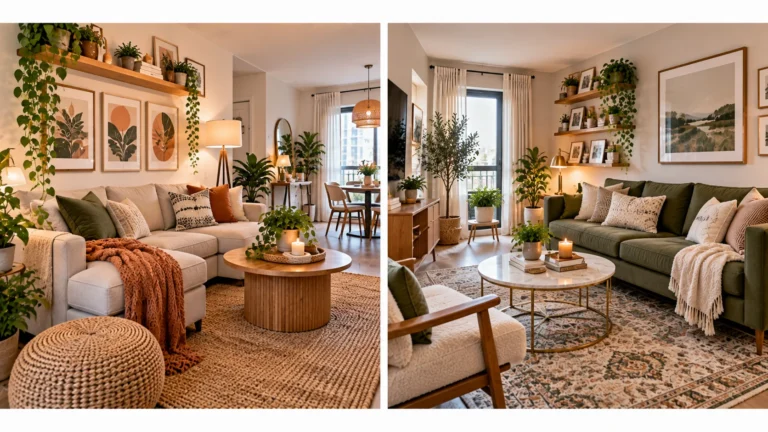
A room where the pillows, throw, and vase all come from one set looks like a showroom. A room where two colors show up in three or four small places looks collected. Pull your two colors from something you already own, like the rug or a print. Blush and navy, sage and cream, or terracotta and white all work.
Then keep everything else neutral so the colors have room to show.
Use each accent color in at least three places.
Let one color lead and the other support.
Mix in a pattern that contains both colors.
Adding a third and fourth color “just because.”
Putting both colors in one spot only.
Buying every accent from the same set.
16. Finish With Flameless Candles and a Small Mushroom Lamp on a Side Table

The last layer is the one that makes a finished room feel lived in.
Set a small side table within arm’s reach of the sofa and give it one job: light. Flameless candles flicker convincingly and skip the open flame, which helps if you have pets, kids, or a cat that likes the sofa arm. A small mushroom or dome lamp adds a soft circle of glow, and one tiny plant keeps the whole corner from looking staged.
Put the candles on a timer and the room greets you every evening.
- ▸Match the table height to the sofa arm so the lamp doesn’t get hidden.
- ▸Choose the warm white setting, not the bluish one.
- ▸Buy candles with a built in timer so you never reach for a switch.
- ▸Leave one clear spot for a mug or a phone.
Start With the One That Bothers You Most
You don’t need a big budget to get a room people save and screenshot. You need light that’s warm, a rug that’s big enough, and two or three small moves that repeat. That’s the whole recipe behind these budget living room ideas.
Start with the one that bothers you most every time you sit down. Maybe it’s the bare window, or the corner that never looks finished. Fix that first, live with it for a week, then pick the next one.
Save this list for the next time you want to refresh your space, and come back when you’re ready for round two.
Your first weekend list