15 Renter Friendly Living Room Ideas That Look Custom

Most rental living rooms have the same problem. The walls are builder beige, the ceiling light is a flat white dome, and the lease says no holes. So the frames stay stacked in a closet and the room feels half decorated, like you’re still waiting to move in.
The usual advice doesn’t help much. Someone tells you to paint, or to swap the flooring, or to hang a heavy mirror, and you already know the deposit isn’t worth the risk.
The good news is that a lot of what makes a room look custom has nothing to do with permanent changes. It comes from texture, height, light, and repeating a few things on purpose. These renter friendly living room ideas all stick, lean, clip, plug in, or pack up when you move. Some take ten minutes. A couple need a free afternoon. None need a drill.
Start with whichever one bugs you most about your room. The rest can wait for next weekend.
Cover One Wall With Peel and Stick Botanical Wallpaper
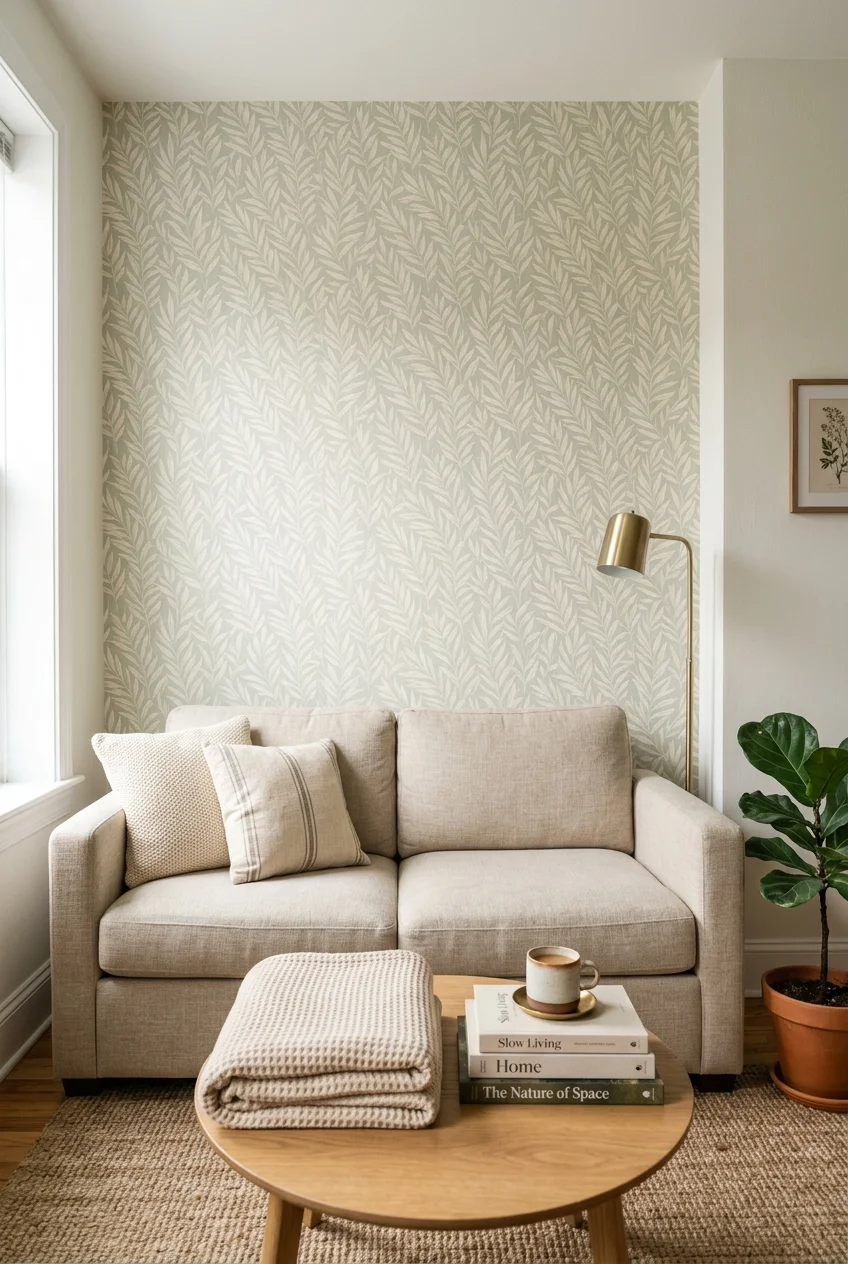
A bare beige wall is the fastest way to make a rental feel temporary.
Peel and stick wallpaper covers it without paint or nails. Pick a tone on tone print, like pale leaves on cream, so it reads as texture instead of pattern. Loud prints compete with the sofa. Quiet ones let the window light do the work.
- Start with the wall behind the sofa, since it’s the one you look at most.
- Test a small piece in a hidden spot first, since paint finishes react to adhesive differently.
- Smooth each strip from the center outward with a plastic card.
One wall is enough. Papering all four turns it into a project.
A flat beige wall behind the sofa. Plenty of furniture, but nothing to look at.
The same wall in a pale leaf print. It gives the wall depth, and window light casts soft shadows across it.
Hang Frames From a Cord and Clips Instead of Nails
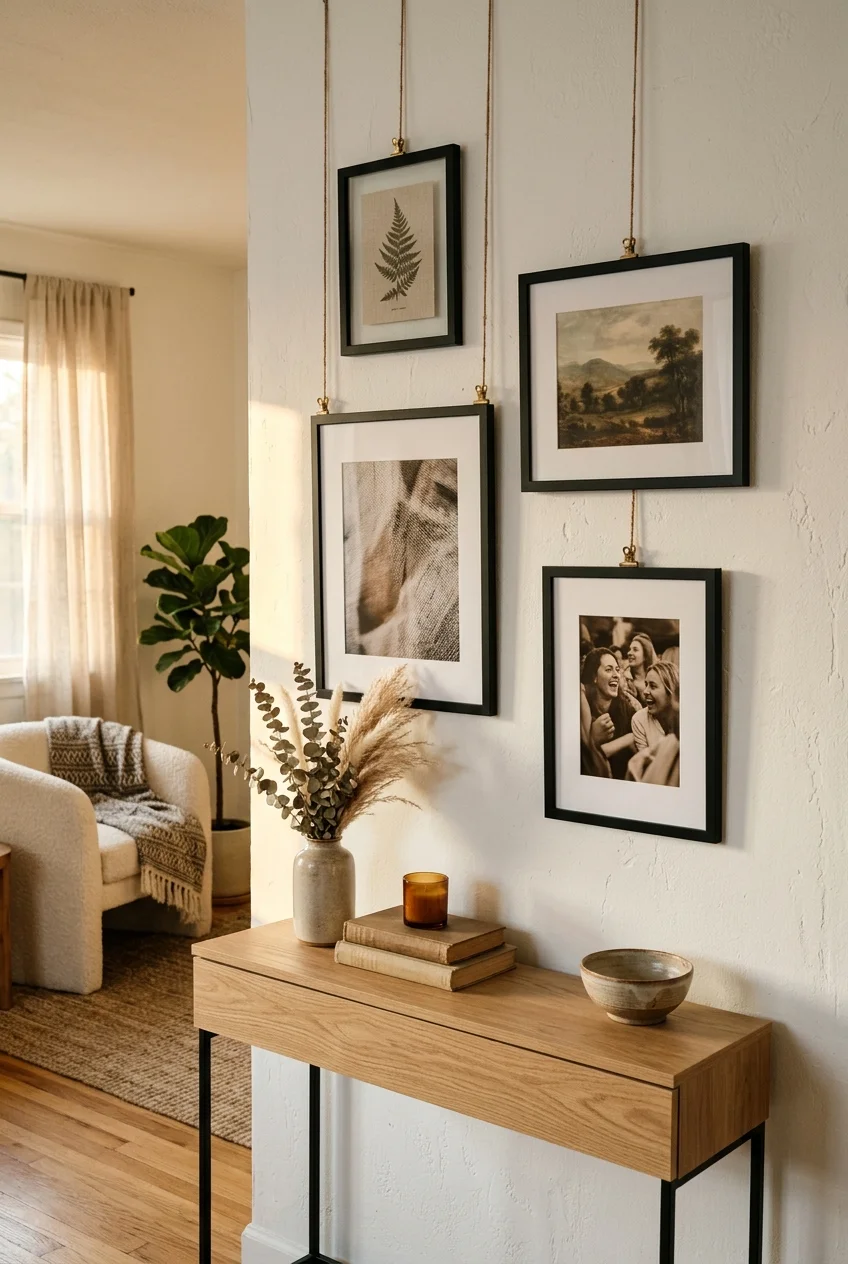
Thin cords, black clips, and four frames hanging at four different heights.
That uneven drop is what makes a wall look collected instead of measured. Each cord hangs from a small adhesive hook, and a clip grips the top edge of the frame. Use light frames with plastic or acrylic fronts, and check the weight limit on the hook package before you load it.
Textured and brick walls are the exception since adhesive grips them poorly. A tension rod across an alcove gives the cords something to hang from.
Hang it in 3 steps
Press small adhesive hooks along a level line near the top of the wall, spaced a little wider than your widest frame.
Tie a cord to each hook and let every one drop to a different length. Hold a frame against the wall first to check the height.
Clip each frame on, step back, and shorten or lengthen the cords until the gaps look uneven on purpose.
Lay a Jute Runner Along the Sofa to Hide Worn Flooring
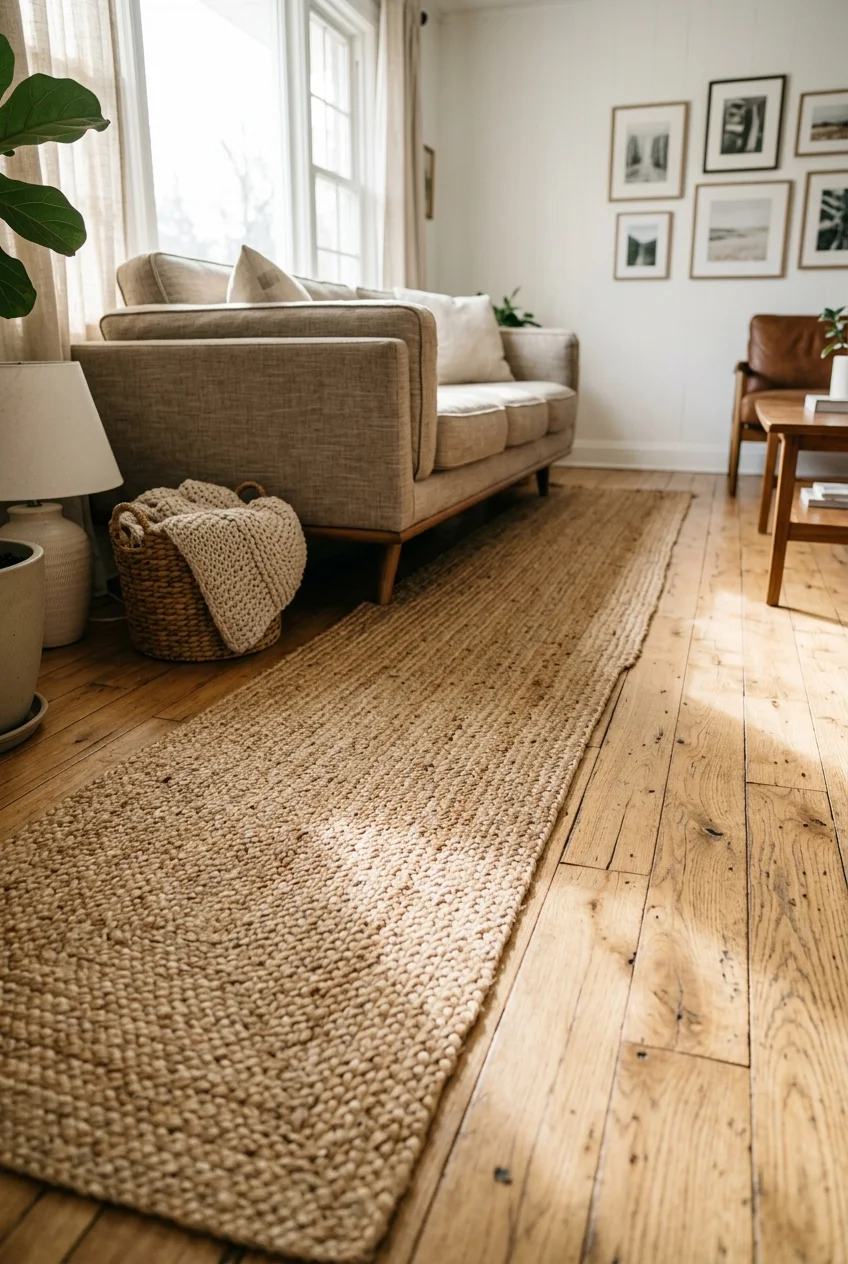
Simple rule: tuck the runner slightly under the front legs of the sofa.
A jute runner along the front of the sofa covers the scuffed strip where everyone walks. The woven texture hides small marks that a plain floor shows off, and it rolls up in a minute on move out day. Pick a shade close to the wood so it blends in instead of cutting across the floor.
Jute doesn’t love spills or damp, so keep it clear of the front door. A small cork mat there catches muddy shoes before they reach the weave.
Tuck the runner under the front legs of the sofa.
Add a non slip pad so the ends stay flat.
Floating the runner in the middle of the room with nothing anchoring it.
Choosing a runner shorter than the sofa. It ends up looking like a doormat.
Climb a Corner With Peel and Stick Wildflower Decals
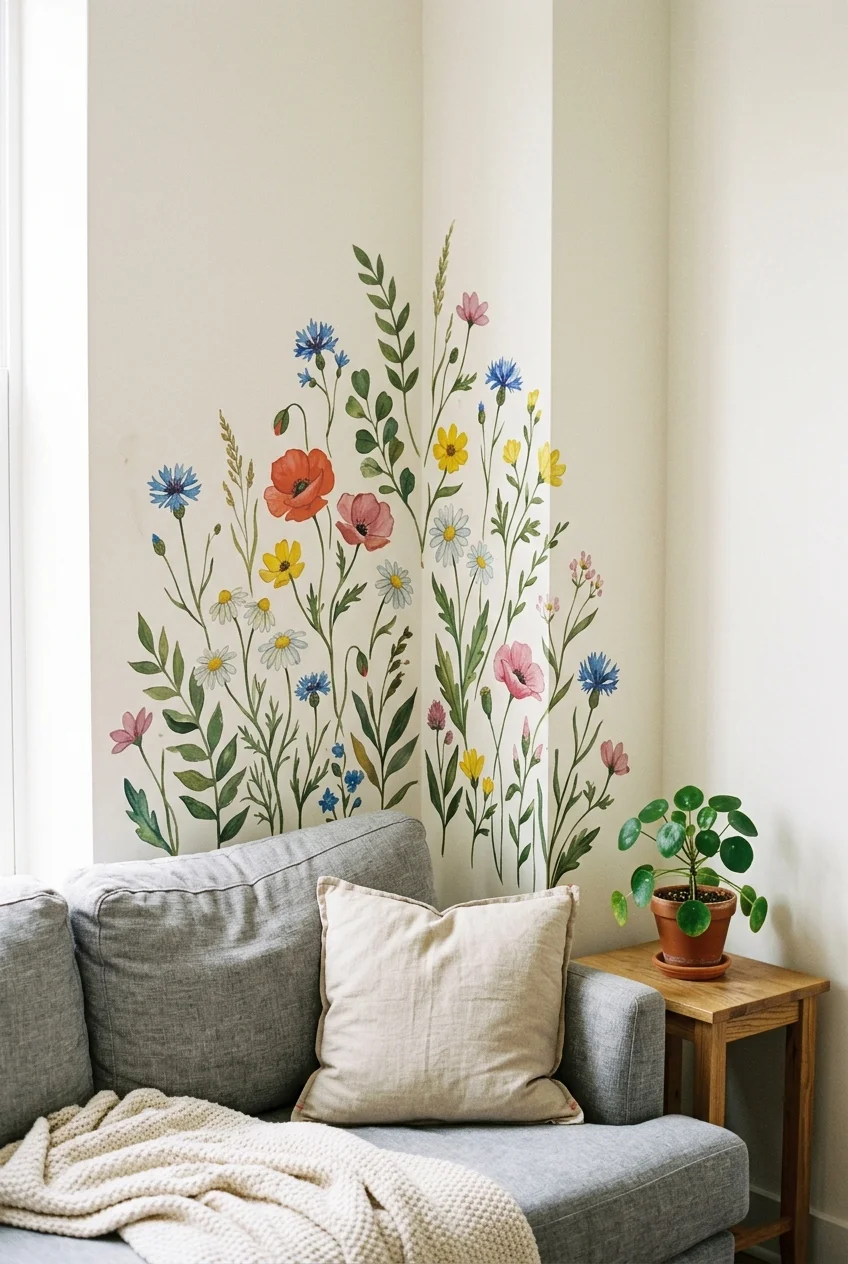
Wall decals get a bad reputation from cartoon animals in kids’ rooms.
Tall wildflower stems are a different thing. They look hand painted when the biggest ones climb a corner and the smaller ones step down the wall toward the sofa. Keep to three or four flower colors, then repeat one of them in a pillow so the wall and the seating look planned together.
Start with the tallest stem, since every other piece lines up against it.
Check these before you peel the backing
Swap the Ceiling Light for a Plug In Pendant
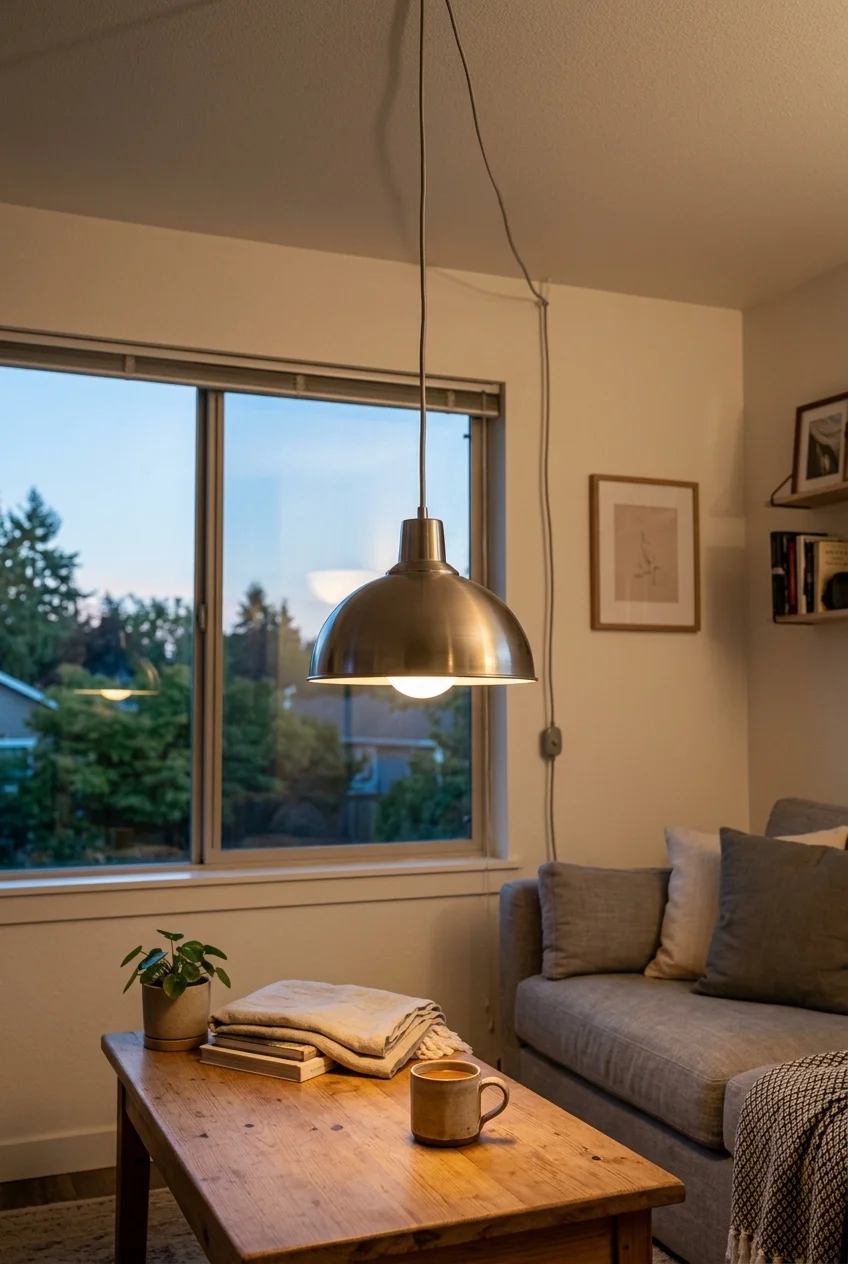
Start by leaving the ceiling light alone. A plug in pendant hangs from a hook, and its cord runs along the ceiling edge and down a corner to the outlet, held in place with small adhesive cord clips. Nothing gets wired, so nothing needs to be undone.
Hang it over the coffee table or beside the window, wherever the flat overhead light does the least for the room. A lightweight shade can hang from an adhesive ceiling hook, but check the weight limit first. A heavier metal shade needs a proper screw hook, so ask your landlord first.
Pair a metal shade with a warm bulb so the light feels soft instead of harsh.
Hang Sheer Curtains High and Wide on a Tension Rod
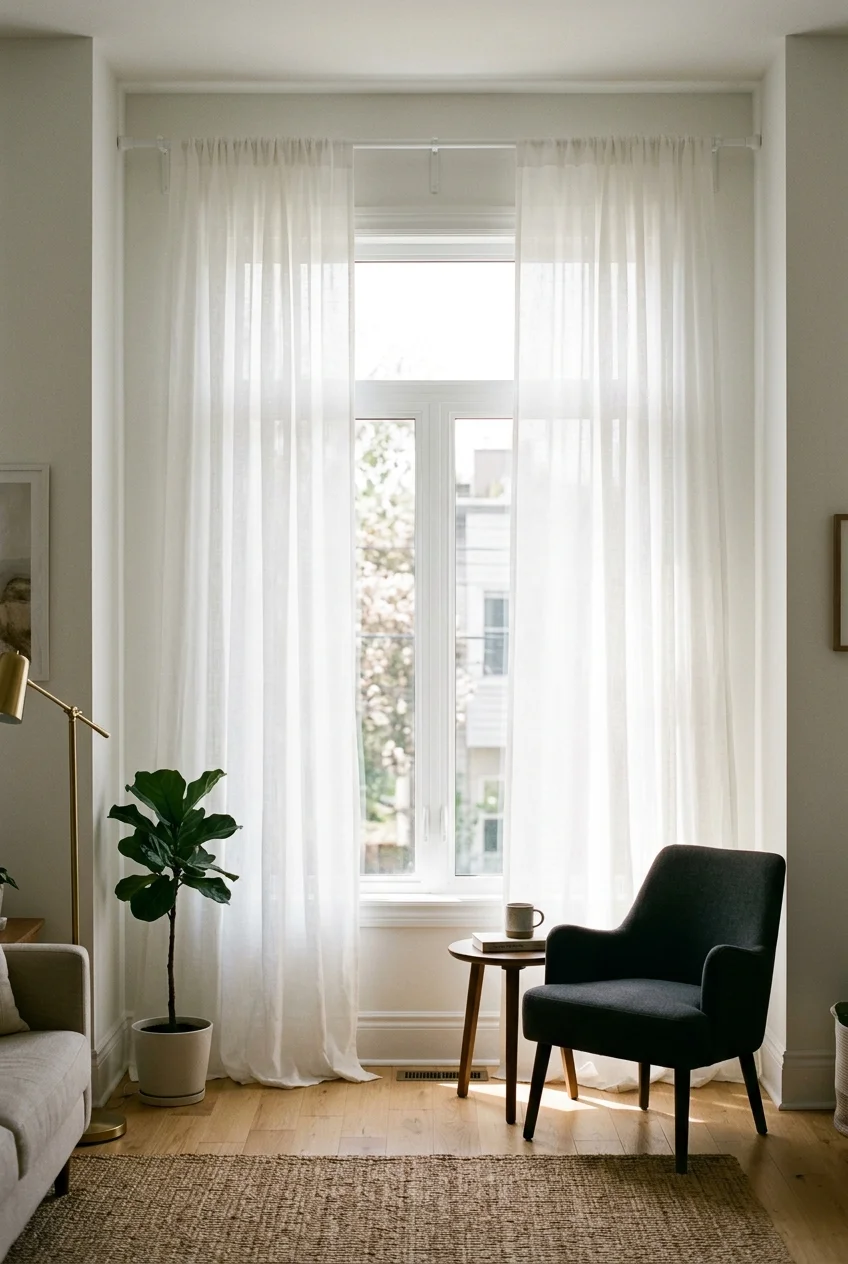
The usual mistake is putting the rod right at the top of the window frame. It chops the window short and makes the ceiling feel lower than it is.
Go higher and wider instead. Hang sheer panels a hand’s width above the frame, let them extend past the sides, and stop them at the floor so they just touch it. The window reads taller, and the sheer fabric still lets the daylight through. Leave the rental blinds in place behind them for privacy at night.
⚠️ Watch Out
A tension rod only holds if the window sits in a recess or between two walls. On a flat wall, use a rod with strong adhesive brackets instead, and make sure the weight rating covers the rod plus the panels. Sheers are light, but the rod adds more than you would think.
Lean a Ladder Shelf Against the Wall for Books and Plants

A ladder shelf gives you storage and height without a single bracket.
It leans, so the wall stays untouched, and the shelf leaves with you at the end of the lease. The slim, tapered shape takes very little floor space, which helps in a small living room.
Load the heavy items low and keep the top shelf light so it stays steady. In a home with small kids or climbing pets, think twice before leaning anything tall against a wall.
Fill the Dark Corner With an Arc Floor Lamp

Around six, the corner by the window goes gray, and the overhead light never reaches it.
An arc floor lamp handles that from the side. The heavy base sits tucked beside the sofa arm while the shade curves out over the seats, so you get reading light without needing a side table. Pick one with a weighted base and check that the arm clears your head when you stand up.
A woven or linen shade throws softer light than a plain white one.
| Linen or woven shade | Metal dome shade |
|---|---|
| Light: a soft glow that spreads out | Light: a focused pool that points down |
| Best spot: beside the sofa for an all over glow | Best spot: over a reading chair |
| Watch for: dust shows up on the fabric | Watch for: can feel harsh without a warm bulb |
Hide the Clutter in Oversized Woven Baskets
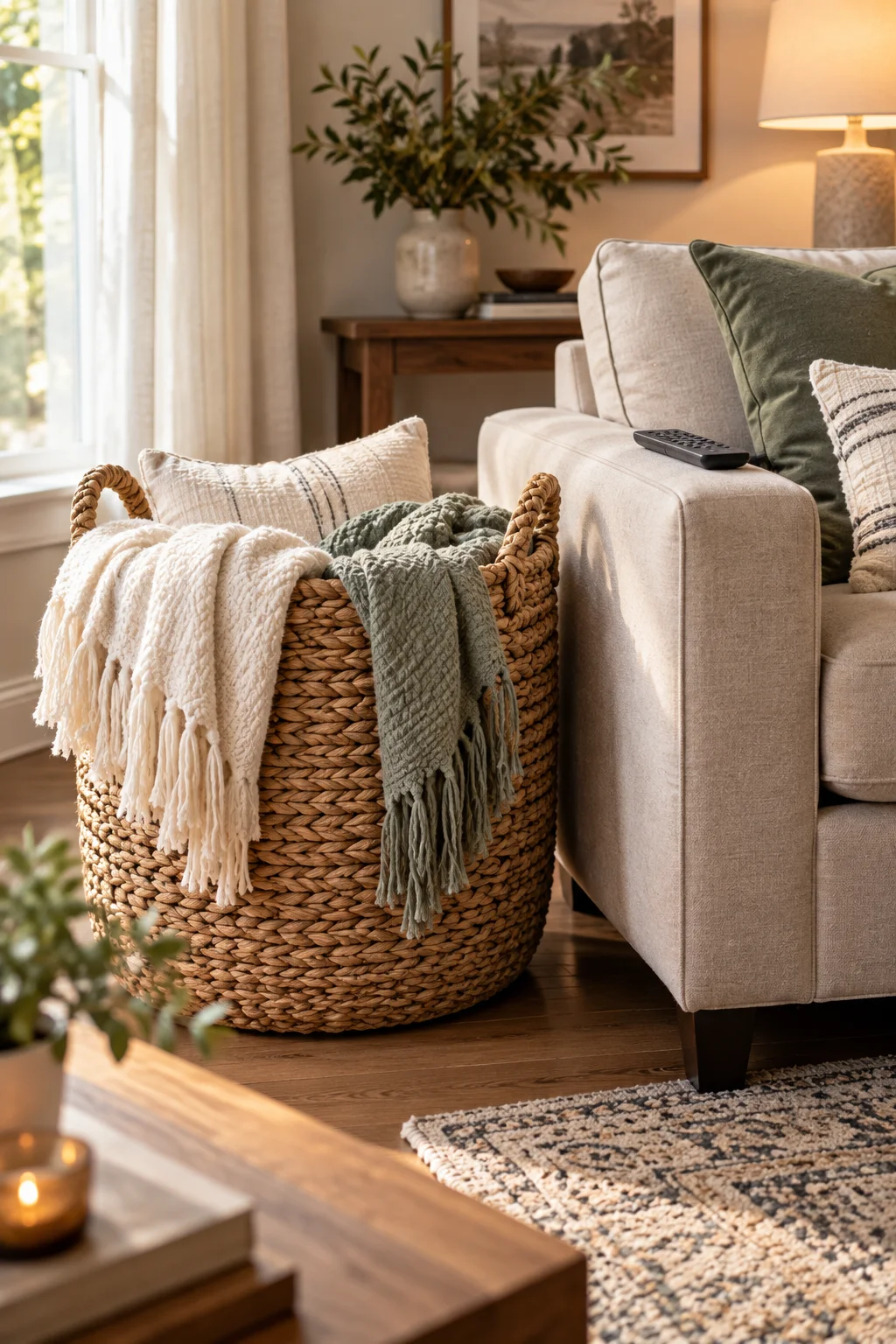
One big basket beats five small ones.
Small baskets multiply, and each one needs its own spot. A single oversized basket by the sofa swallows the throw blankets, the remotes, and the toy that always ends up under the cushions. It reads as furniture instead of storage.
Choose a tight weave so small things don’t poke through, and pick one with handles so it’s easy to move when you vacuum. A lidded basket on a shelf handles cords and chargers.
Size the basket for your biggest throw blanket. If it has to be squashed to fit, the basket is too small and everything will end up on the sofa again.
Hang a Macrame Piece From One Removable Hook
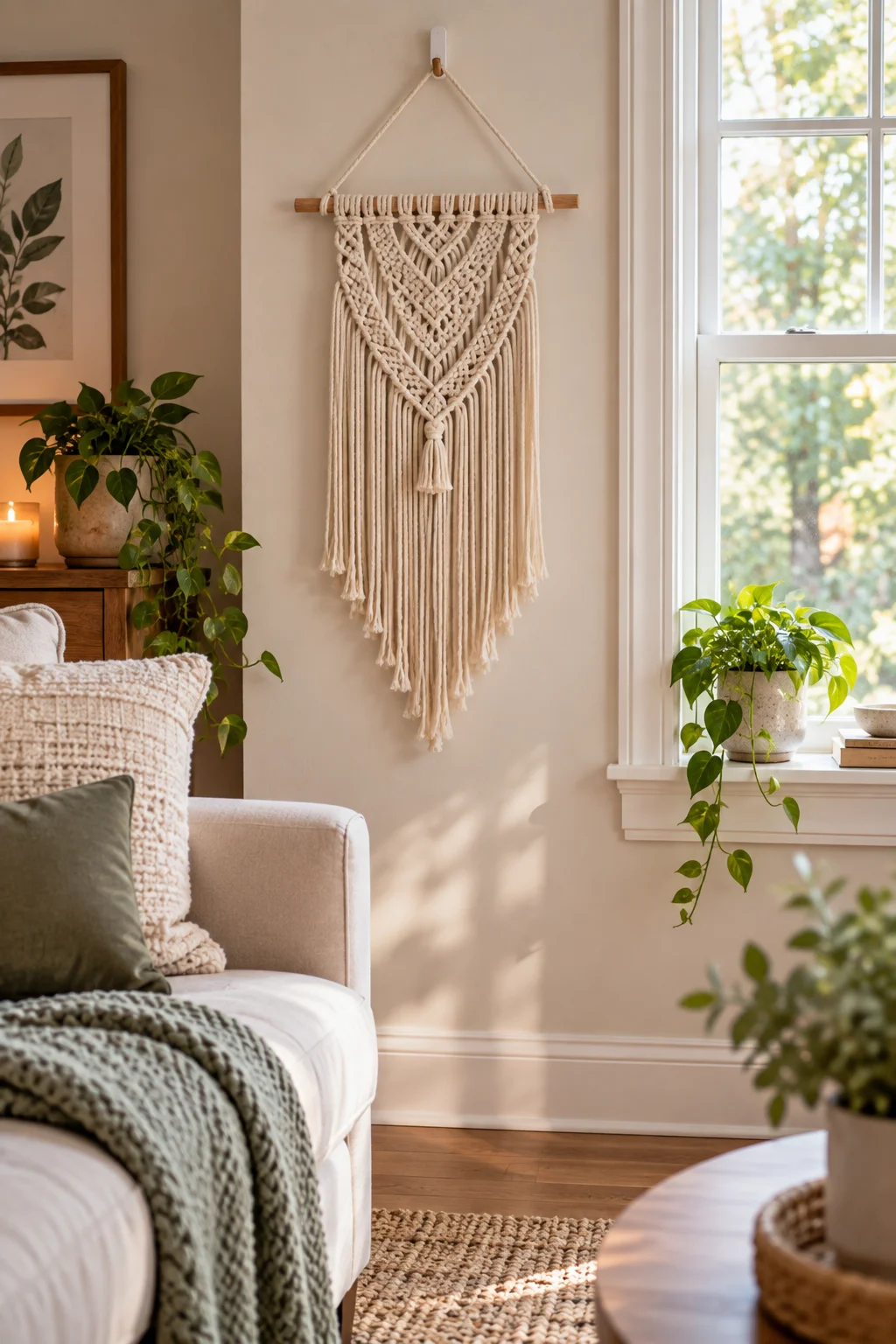
An empty wall next to the window is where a lot of living rooms go quiet.
A macrame piece fills it with texture and only needs one small hook. Hang it from its wooden dowel so the fringe drops straight down, and leave a few inches between it and the window frame so it doesn’t crowd the curtains.
Cream or oat colored cotton rope ties in with a jute rug or a linen sofa without competing with either. One hook is all it takes.
📌 Good To Know
Every removable hook has a weight limit printed on the package. A cotton piece on a small dowel is light, but a big one with wooden beads adds up, so check the rating first. To take it down later, pull the tab slowly straight down along the wall instead of outward. That is the gentlest way to release the adhesive.
Lean a Floor Mirror in the Dimmest Corner
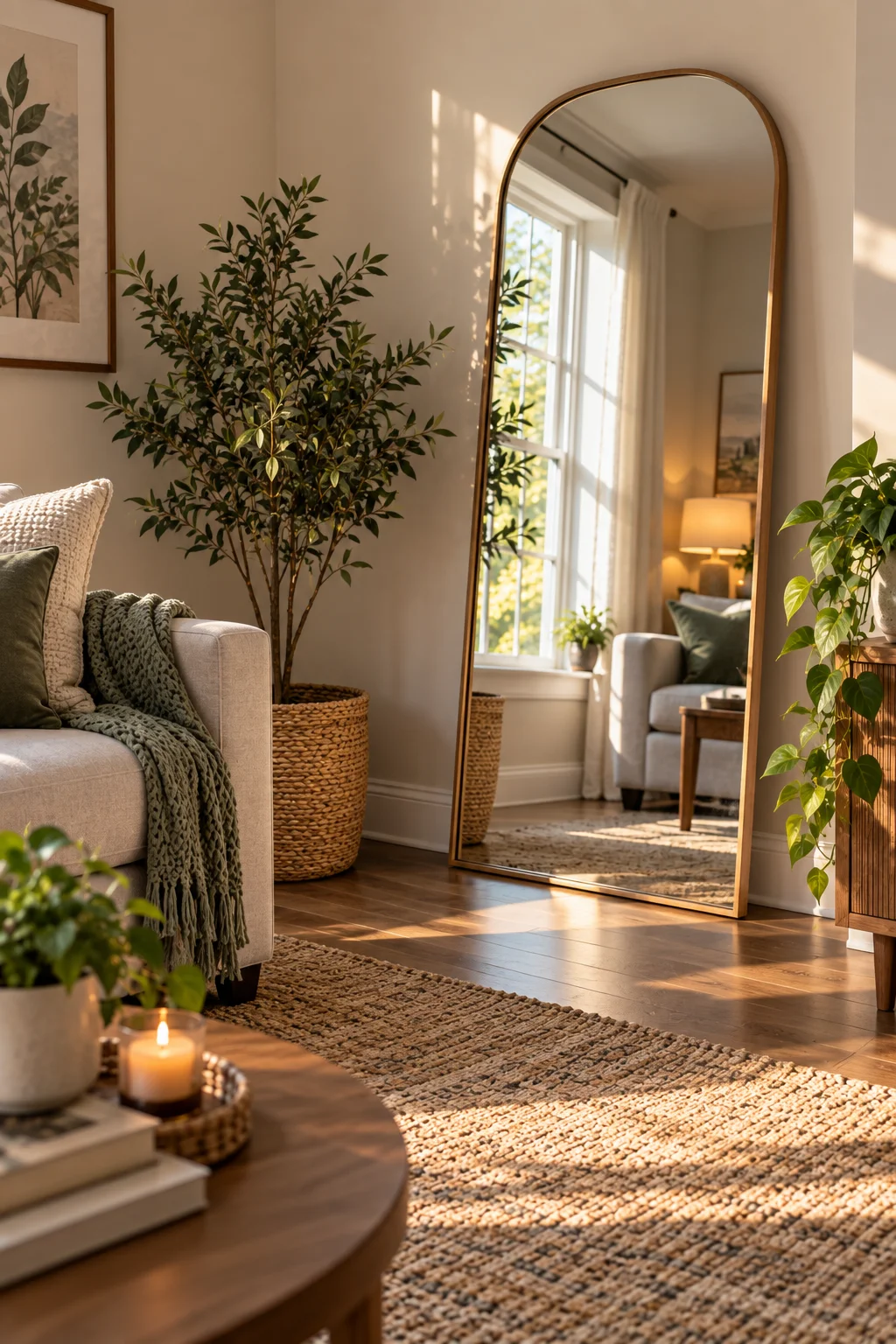
The far corner of a rental living room is almost always the darkest spot, the one that swallows light by four o’clock.
A floor mirror fixes that without touching the wall. Lean it into the corner at a slight angle, angled to catch whatever light comes through the window, and the reflection doubles the glow instead of adding another lamp. Go a size or two bigger than feels reasonable. A mirror that’s too small just looks like an afterthought propped in a gap.
Skip ornate gold frames if the room already leans neutral. A slim black or natural wood frame reads more like it was chosen on purpose.
A flat, dim corner with no light source and nothing to look at once the sun moves.
The same corner leaning a mirror, catching window light and reflecting it back into the room.
Swap the Lamp Shade Instead of the Whole Lamp

Most people replace the whole lamp when the shade is the actual problem. A stained or dated shade drags down a perfectly good base, and a new shade costs a fraction of a new lamp.
Measure the harp first, the small wire loop under the shade, since fitters vary and a mismatched one never sits straight. A woven rattan or linen shade adds texture a plain lamp never had.
Check the fitter type before you buy.
Match the shade width to the lamp base, not just the room.
Pick a warm bulb so the new shade glows instead of glares.
- ▸Measure the harp before you shop, not after.
- ▸Note the fitter type: clip-on, spider, or uno.
- ▸Keep the new shade’s width in proportion to the base.
Divide the Room With a Folding Screen

A studio or open concept rental rarely gives you a real reading corner. It’s one long room doing three jobs at once, sleeping, working, and unwinding, with nothing marking where one ends and the next begins.
A folding screen solves that without a single screw. Three or four panels, angled slightly open, block the sightline to the bed or desk and signal that the space behind it is for sitting down. Rattan or louvered wood panels let light filter through instead of closing the space off completely. It folds flat in a closet on moving day.
Style the Coffee Table With a Tray and a Stack of Books

A bare coffee table looks unfinished even when the rest of the room is done. It’s usually missing layers, not furniture.
Start with a tray, since it corrals everything else and keeps the table from feeling cluttered. Stack two or three books flat, spines facing out, and set a small plant or candle on top for height. Leave one open patch of table for a coffee cup or the remote. Two minutes of styling and the table stops looking like an afterthought.
Set down a tray first to anchor everything that follows.
Stack two or three books flat, spines facing out.
Top the stack with one small object, then leave open space for daily use.
Face a Plain Console With Peel and Stick Fluted Panels

People assume a built in look means hiring someone and living with dust for a weekend. It doesn’t.
Peel and stick fluted panels, the reeded wood look sold by the sheet, get cut to size and pressed straight onto a plain laminate console or a boring media stand. The vertical grooves catch light the way real millwork does, and from a few feet away most people can’t tell it’s not built in. Measure twice before you cut. The adhesive backing does not forgive a second try.
Renter Friendly Living Room Ideas That Actually Stick
None of these renter friendly living room ideas ask for a drill, a landlord’s permission, or a deposit you’re willing to risk. What actually changes a room is layering, a wall with some texture, light that reaches every corner, frames hung with intention instead of scattered, and a few materials that repeat on purpose across the space.
Pick two or three to start. A leaning mirror and a lamp shade swap can both happen this weekend without much planning. The rest can wait until you have a free Saturday and feel like tackling one more corner.
Save this list so it’s easy to find again next time you’re staring at a bare wall wondering where to start.
This weekend’s easiest wins